ServicesSurface Preparation and Sanding
Surface Preparation and Sanding in Bayonne, NJ
A good finish depends on what sits underneath it. We scrape, fill, feather and sand walls and ceilings so old patches, ridges and flaking spots disappear. You get a clear arrival window, a realistic schedule for drying time, and a clean work area when we leave.
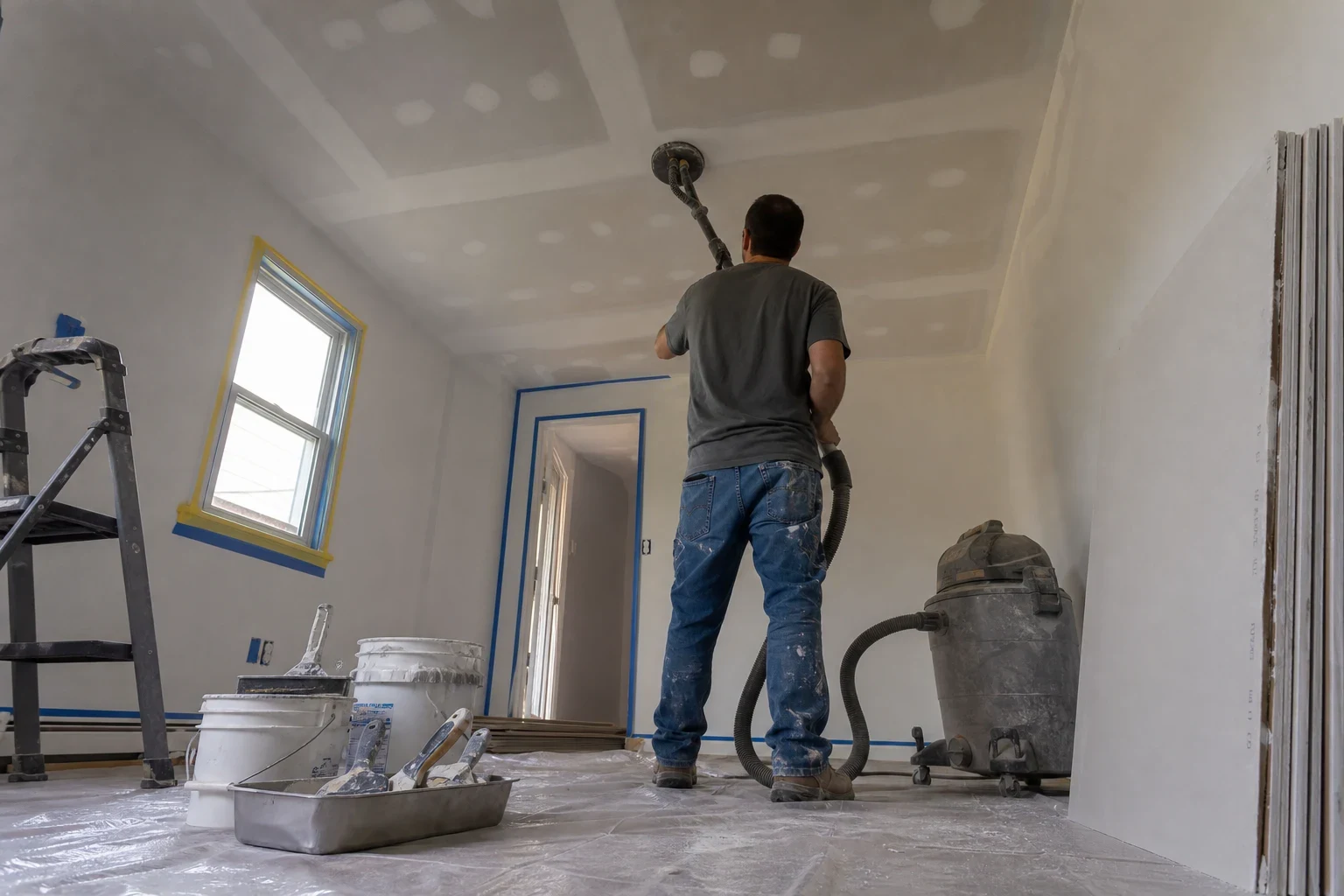
The quiet work that decides how a wall looks
Surface preparation is everything that happens before a final coat: removing what is loose, filling what is low, sanding what is high, and leaving the surface clean enough for primer and paint to bond. Skip it and every seam, old patch and roller ridge shows the moment light hits the wall from the side.
It is the right call when a wall looks tired rather than broken. If there is a hole, water damage or a soft spot, our drywall repair or drywall patching service comes first, and sanding follows as part of that job. If the surface is sound but uneven, prep and sanding on their own are often all it needs.
Joint compound needs time to dry between passes, and that time changes with humidity. We plan the visit around it and tell you up front how many trips the work will take, so you are not left guessing when the room will be usable again.
What prep and sanding includes
Checking the wall under low light
A work light held close to the surface brings out every dent, ridge and past repair. We point them out to you before any work begins.
Taking off what is loose
We start by removing flaking or bubbled paint, leftover anchors and wallpaper paste. Compound does not bond well to anything that is not firm.
Filling low spots and blending old patches
Dents and hollows are filled, and earlier patches get thin, wide coats so their edges taper into the wall rather than leaving a raised outline.
Sanding that keeps dust down
Fine-grit screens and vacuum-connected sanding tools keep most dust out of the air. Shiny surfaces get scuffed so the next coat can grab hold.
Primer on repaired spots
New compound and exposed paper soak up paint unlike the painted wall around them. Priming those spots keeps the final sheen even.
Clearing out
We take the plastic down with care, vacuum the floors and wipe surfaces, leaving the room set for whatever comes next.
Signs your walls need preparation before anything else
Old patches show through
A square outline or raised ring where a past repair sits means the edges were never feathered. Paint alone will not hide it.
Ridges along seams
Tape joints that catch the light or look like faint lines were left high or under-sanded. Careful sanding and a skim pass flatten them.
Peeling or flaking paint
Paint lifting in sheets or chips usually means poor adhesion underneath. New paint over it tends to peel the same way.
Nail pops and small dents
Round bumps or shallow craters spaced along a stud line are common in older walls and are simple to set, fill and sand flat.
Glossy or slick surfaces
Old semi-gloss or enamel needs a scuff sand before anything new can bond to it properly.
How a prep and sanding visit runs
- 1
A call to plan it
You describe the room and what bothers you about the walls. We set an arrival window and give you a realistic idea of how many visits the drying time will need.
- 2
Protecting the room
We lay floor covering, cover or move furniture away from the walls, and tape plastic over doorways and vents to keep dust in the work area.
- 3
Prep in stages
Scraping and filling come first. Compound dries before we sand, and deeper fills may need a second coat. If drying runs slower than expected on a damp day, we tell you before the next visit, not after.
- 4
Final check and cleanup
We go over the wall again under raking light with you, touch up anything that still shows, prime the repaired areas and clean the room.
What shapes the cost of prep and sanding
We price this work after seeing the room, because two walls of the same size can need very different effort. The quote you get by phone or on site explains what the work involves and why.
- Area and number of surfaces
- One accent wall is a different job from a full room including the ceiling. Ceilings take longer because the work is overhead.
- Condition underneath
- A sound wall with a few dents needs a light sand. Widespread peeling, wallpaper residue or many old patches add scraping and filling time.
- Drying passes
- Deeper fills need more than one coat of compound, and each coat means drying time and possibly another visit.
- Older paint
- In homes built before 1978, old paint may contain lead. We discuss testing before sanding painted surfaces, and that can change how the work is done.
- Room access
- Full furniture, tall ceilings or tight stairwells add setup and protection time.
Questions about surface preparation and sanding
Something not covered here? (201) 298-0796
How much dust will there be?
Some dust is unavoidable with sanding, but we keep it contained. We use vacuum-attached sanding tools, seal doorways and vents with plastic, and clean before we leave. Most people find the rest of their home stays clean.
How long does prep and sanding take?
A single room with light flaws can often be done in one visit. Rooms that need filling usually take two, since compound has to dry before it is sanded. We tell you the expected number of visits when we plan the work.
What happens if the schedule has to change?
Humid weather can slow drying, and occasionally a wall reveals more damage once loose paint comes off. When that happens, we call you, explain what changed and give you a new time. You will not find out by waiting for someone who does not arrive.
My home is older. Is sanding the old paint safe?
Paint applied before 1978 may contain lead, and sanding it releases dust you do not want in the air. If your home falls in that range, we talk about testing first and adjust the method based on what we find.
Do I need to empty the room?
Not completely. Clearing small items, wall hangings and anything fragile helps. We move larger furniture toward the center of the room and cover it.
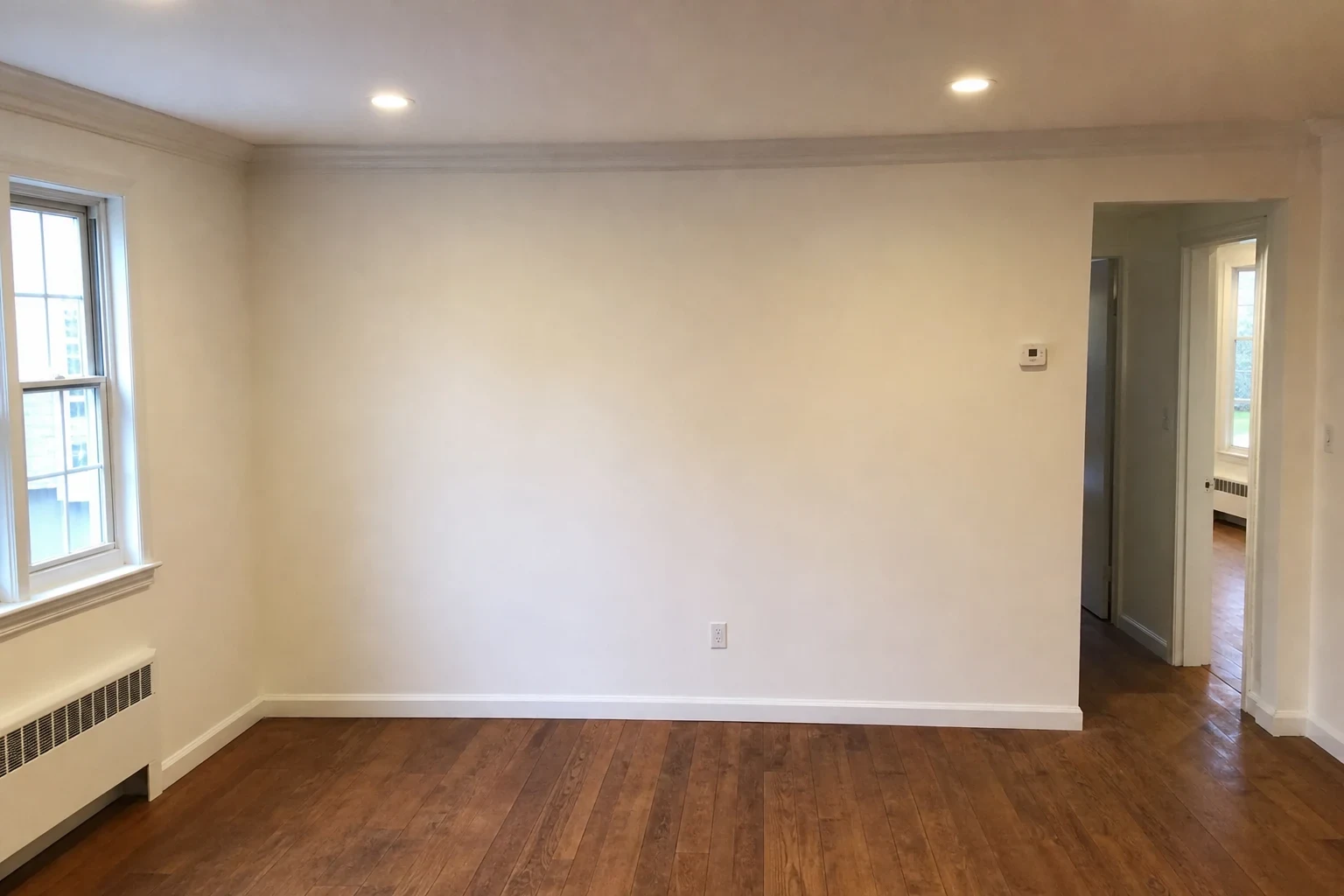
Ready for walls that look smooth in any light?
Tell us about the room and what you want fixed. We will set an arrival window and give you an honest schedule for the drying time involved.