ServicesPaint Touch-Ups
Paint Touch-Ups in Bayonne, NJ
After a patch or repair, the paint is what you actually see. We prime the new compound, match your sheen and color, and feather the edges so the spot fades into the wall. You get a clear arrival window and a realistic finish date before we start.
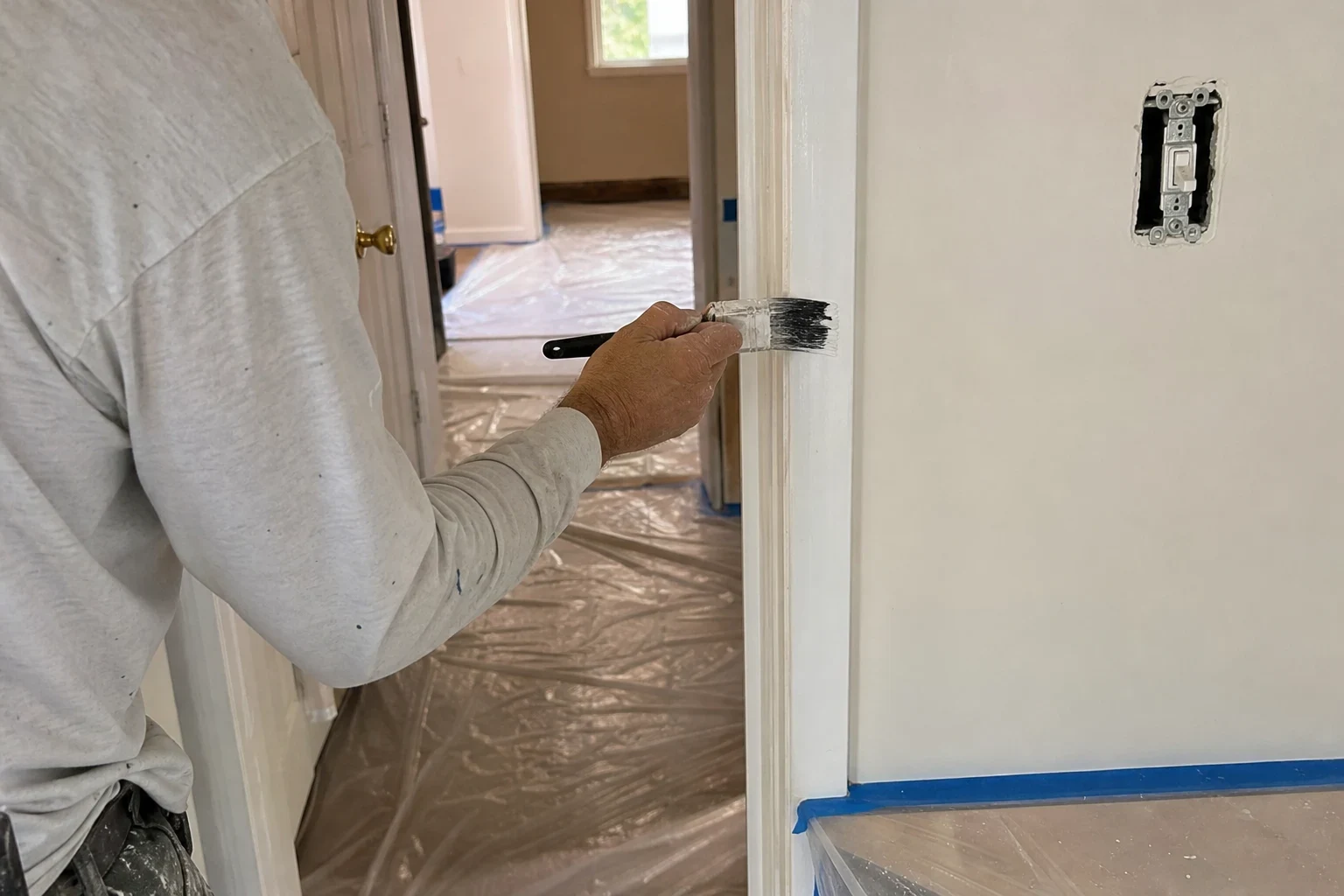
Where touch-up work fits
Touch-up work is for small, contained areas of your home: a filled hole, a sealed crack, a worn corner, a ceiling spot once the leak above it has been fixed. It is the final layer that hides drywall work, and it is easy to get wrong. Fresh joint compound takes paint differently than the wall around it, so a patch left unprimed turns into a dull or glossy square as soon as light crosses it.
We approach it as finish work. That means sealing the repair, matching the sheen as well as the color, and feathering paint outward so there is no hard line. If your walls have aged or faded enough that a spot blend will not hide, we tell you on the first visit rather than after the paint dries.
Touch-ups usually follow our drywall patching or wall repair, but we also handle them on their own when the surface underneath is sound.
What a touch-up visit includes
- Priming new compound
- Bare joint compound and exposed paper get a coat of primer first. This stops the patch from soaking up paint and showing through as a flat spot, a problem known as flashing.
- Sheen and color matching
- We match from a leftover can, a label, or a small chip taken from a hidden area. Sheen matters as much as color. Eggshell next to flat reads as a different paint, even in the right shade.
- Feathered edges
- Paint goes on in thin passes worked outward so the edge fades into the existing finish. On ceilings we roll in the same direction as the original coat.
- Texture check
- If the area had orange peel or knockdown texture, we confirm the texture matching is right before any paint goes on. Paint will not hide a smooth patch on a textured wall.
- A clean work area
- Floors and furniture near the work are covered, and we leave with the drop cloths, tape and debris. Most touch-ups leave the room usable that same evening.
When your walls are due for a touch-up
You can spot the patch from the doorway
A repair can look fine until afternoon sun slants across it. A glossy or flat square means the patch went unprimed or the sheen is wrong.
A repair left as bare compound
A filled hole still showing white or gray is an unfinished job. Unsealed compound also collects dirt and fingerprints fast.
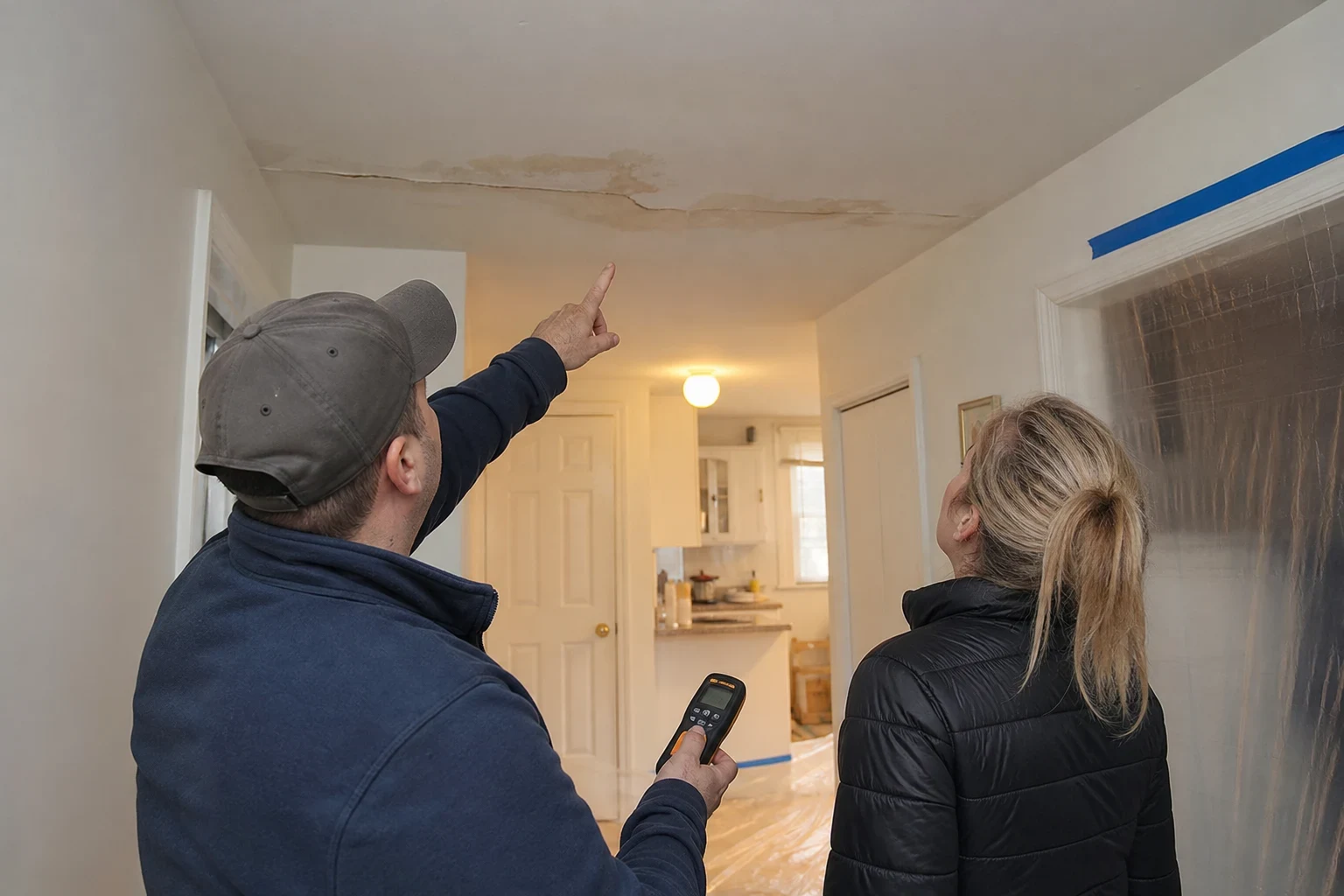
A ceiling stain after the leak was fixed
Ordinary paint will not hold back a water stain. Without a stain-blocking primer under the color, the ring shows up again.
Marks in high-traffic spots
Hallways, stairwells and the wall behind a door get bumped all the time. A careful touch-up keeps them looking looked after.
A sale or showing coming up
Little marks catch the eye in listing photos and walkthroughs. We work toward your date and confirm it ahead of time.
What sets the price of a touch-up
Touch-ups are small jobs priced on the time and materials they take, not just the square footage. We go over the factors on the phone and give you a clear quote before starting. Nothing gets added unless we talk with you first.
How many spots, and how big
A single patch in one room is quicker than twelve spread along a hallway and up a stairwell.
Finding the right paint
With the original can on hand, it is simple. Matching from a chip instead adds steps and can mean a second visit.
Stains and the primer they need
Water and smoke stains call for a stain-blocking primer, which means one more coat and more drying time.
Height and ceilings
Touch-ups on ceilings and stairwells need ladders or planks and extra care to protect the floor underneath.
How many trips
When a repair has to cure before painting, the work may take two visits. You hear that at the start so you can plan your week.
How a touch-up job runs
- 1
Plan it by phone
Tell us what was repaired, which rooms, and whether you have the original paint. We give you a realistic sense of how many visits it will take, since primer and paint each need time to dry.
- 2
An arrival window you can count on
We set an arrival window you can plan around. If an earlier job runs long or materials are delayed, we let you know as soon as we do, not after the window has passed.
- 3
Prep and prime
We protect the floor, clean the surface, lightly sand the repair and apply primer. In humid Bayonne summers we allow extra drying time rather than rushing the next coat.
- 4
Paint and blend
Color goes on in thin, feathered coats. We check the area from several angles and under the room's own lighting before calling it done.
- 5
Walkthrough and cleanup
You look it over with us. We pack up drop cloths and tape, and leave any remaining paint labeled for your next touch-up.
Questions about touch-ups
Will the repaired spot blend with the wall around it?
Usually, as long as both color and sheen can be matched and the nearby paint is in fair condition. Paint fades and yellows over time, which makes older walls harder to blend. If we expect a spot repair to show, we tell you up front and lay out choices, like running the touch-up to the closest inside corner.
What if I no longer have the original paint?
We can usually come close. We take a small chip from somewhere out of sight, like inside a closet or under a switch plate, and the paint store reads the color. Then we brush on a test spot to check the sheen, because the right color in the wrong finish still stands out.
Why not paint the patch the same day?
Compound must be fully dry before primer goes on, and primer must dry before paint. Painting over wet compound causes bubbles, cracks or a patch that shows later. Depending on how thick it is and how humid it gets, a second visit may be needed, and we plan that with you at the start.
Do you only touch up your own repairs?
No. We also cover scuffs, small dings and stained spots on walls and ceilings that are otherwise in good shape. If we spot cracked tape or a soft area underneath, we show you and discuss a repair before any paint goes over it.
How should I care for the touch-up afterward?
Let the paint cure for a couple of weeks before you scrub it. Store the leftover paint we label for you sealed and away from freezing temperatures, so later touch-ups come from the same batch.
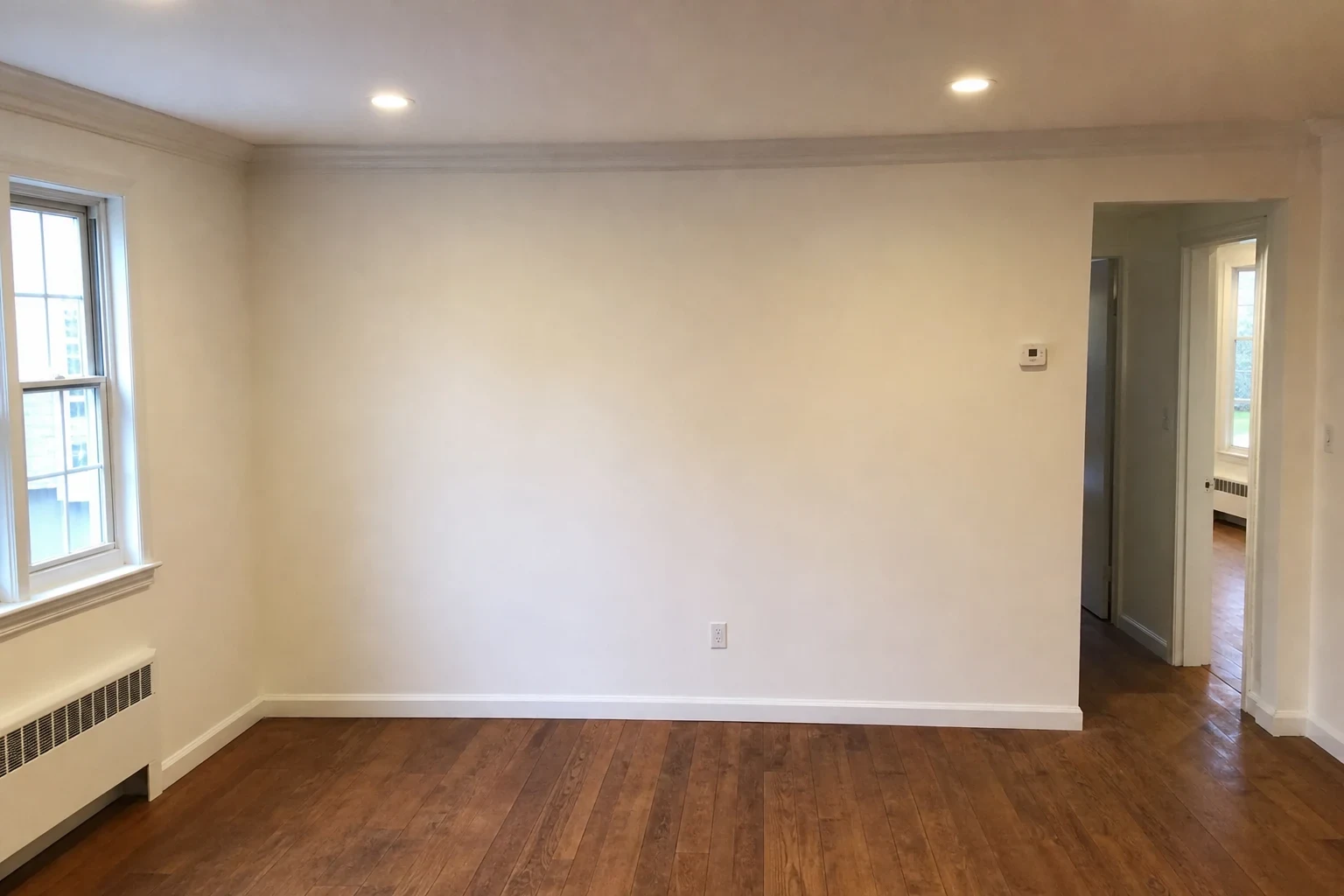
Make the repair disappear
Tell us what was fixed and when you need it finished. We will give you a clear quote by phone and an arrival window you can plan your day around.