ServicesDrywall Patching
Drywall Patching in Bayonne
Doorknob holes, empty anchor spots and squares cut open by other trades are what we close up. Before the first visit you will know how many trips the job takes and when we will arrive. The finished patch sits flush with the wall around it, and we leave a clean work area behind.
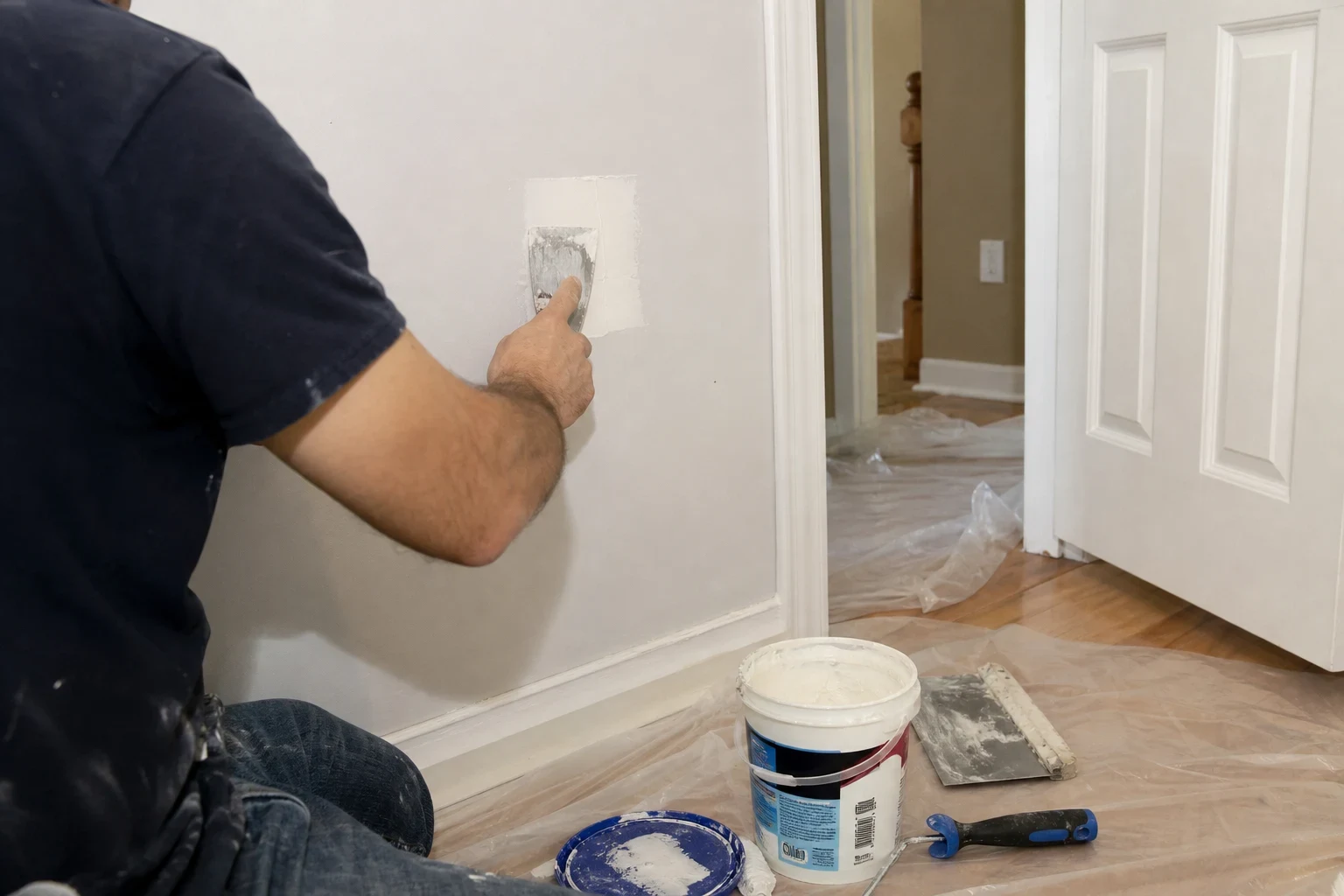
Where patching fits
A patch suits damage with clear edges: a handle that broke through, the bare spot left when a TV mount comes down, an opening cut for an electrician, a line of anchor holes. The board surrounding it is still firm, so we rebuild the missing section and leave the rest of the wall alone.
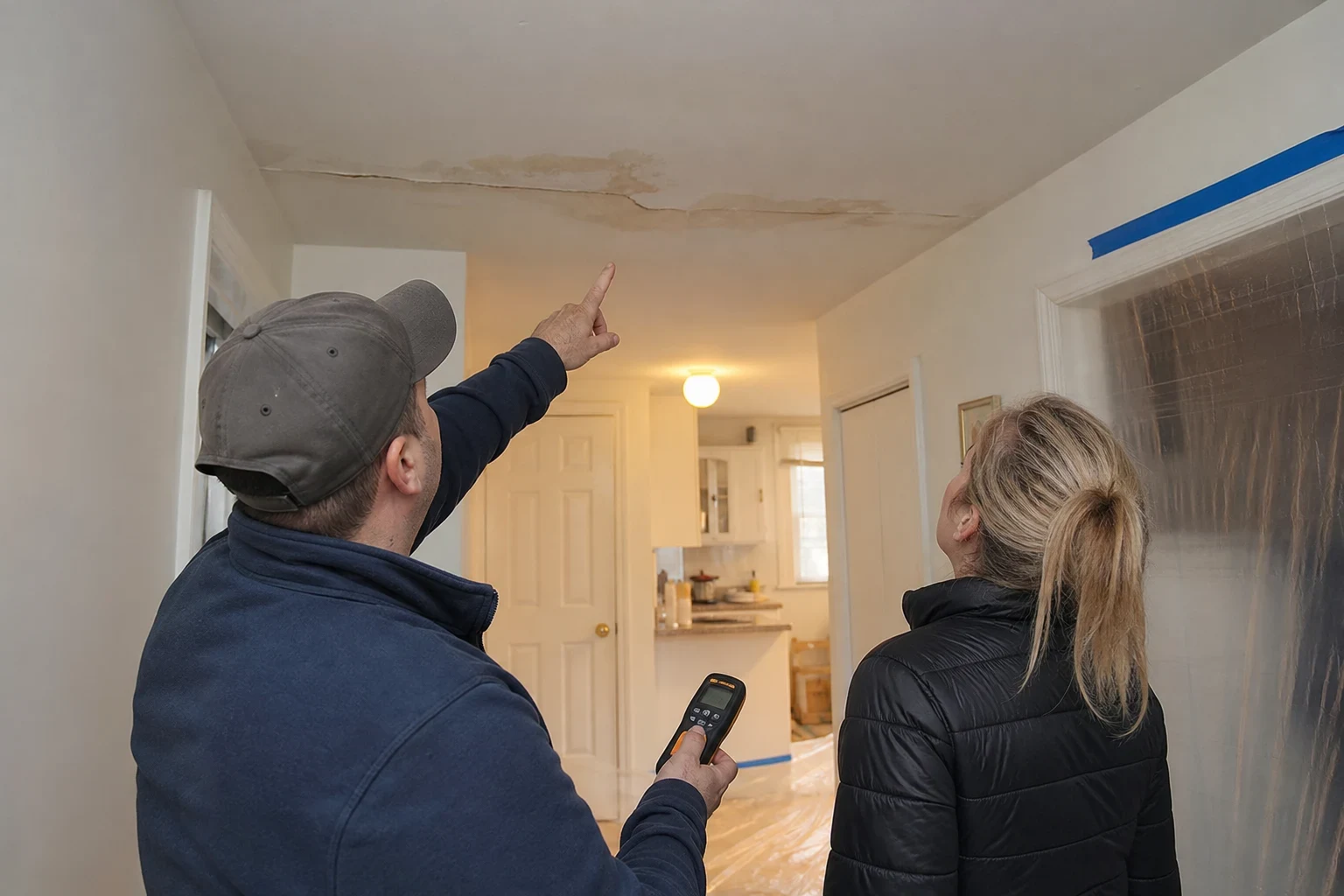
If the drywall is soft, stained from a leak above or cracking in long lines, a patch will not hold for long. In that case we will say so on the call and point you toward our drywall repair or ceiling repair work instead.
Compound has to dry between coats, and we plan the visit around that. Before we start, you will know whether your patch is a one-visit job or needs a return trip.
What every patch job covers
- 01
Trimming to firm edges
Ripped paper and broken gypsum get cut away until we reach board that holds. Covering crumbly material is the reason so many fast repairs split open after a few months.
- 02
Support behind bigger openings
For anything wider than a fist, we fasten wood cleats or a backer inside the wall and screw a cut-to-fit piece of new drywall to it. Small holes can take a mesh or paper-faced patch instead.
- 03
Tape and wide, thin coats
We tape the joints and build compound up in light layers, spreading each one past the edge of the one under it. That gradual taper stops the patch from standing out as a raised square when low light hits it.
- 04
Contained sanding
Sanding is done by hand or with a sander hooked to a vacuum. Nearby openings are masked, drop cloths go down, and the floor and furniture around the work stay covered until we clean up.
- 05
Matching the wall's texture
Few walls are truly smooth. Light orange peel, knockdown or the soft roller texture built up from years of repainting all get copied onto the patch so it looks like the wall around it.
- 06
Sealing first, then color
Bare compound drinks in paint more than the painted wall does, so color applied straight over it dries with a dull ring. Every patch gets primer first, and if you still have the original paint, we can follow with a touch-up.
Questions about Drywall Patching?
Call(201) 298-0796Signs a patch is overdue
A hole you keep covering
If a picture frame or piece of tape has been hiding a hole for months, it is a small job that is easy to put on the calendar.
Doorknob damage behind a door
A missing door stop lets the handle hit the same spot until it breaks through. We patch it and can suggest where a stop belongs.
Anchors left after moving things
Shelves, mounts and curtain rods leave clusters of holes and torn paper. Landlords often see these between tenants.
Access cuts that were never closed
Electricians and other trades sometimes open a wall and leave the square for someone else. We close it with new board and blend the finish.
A crack or bulge around an old patch
An earlier patch done without backing or proper tape may start to crack or bulge. We cut it out and redo it properly.
How a patching visit runs
- 1
A call to size the job
You describe the damage, or tell us how many spots there are. We tell you what is likely involved and give you an arrival window for the first visit.
- 2
Prep and protection
On arrival we move what needs moving, lay drop cloths and mask outlets or vents nearby. Then we cut the damage back and set any backing.
- 3
Coats and drying time
Fast-setting compound lets us finish many small patches in one visit. Larger patches need overnight drying between coats, so we book the return before we leave and let you know if the timing shifts.
- 4
Sanding, texture and primer
Once the last coat is dry we sand, check it under a work light, match texture and prime. A paint touch-up follows if you have the paint.
- 5
Cleanup and walkthrough
We vacuum, fold up the coverings and walk you through each patch so you can see the result in good light.
What affects the cost of a patch
Most patching is priced by how much work each spot takes, not by the square foot of wall. We explain the scope on the phone and confirm it before work begins, so the number does not change once we are in your home.
- Size and number of holes
- A few nail holes take minutes. A cluster of mount holes or a hole the size of a dinner plate needs backing, new board and more coats.
- Return visits for drying
- Patches that need overnight drying mean a second trip. Grouping several patches into the same visits keeps that efficient.
- Texture and wall condition
- Smooth walls are simplest to blend. Matching an older texture, or working around plaster in older Bayonne homes, takes more time.
- Location and access
- High stairwell walls, tight closets and spots behind fixed cabinets slow the work and may need ladders or staging.
- Primer and touch-up
- Priming is part of every patch. A paint touch-up adds time, and color matching is easier if you have leftover paint.
Drywall patching questions
Can you finish my patch in one day?
Small holes often can be, using fast-setting compound. Larger patches with new board usually need a second visit after the compound dries overnight. We tell you which it is when we schedule, and we let you know if anything changes.
Will I be able to see the patch afterward?
Our aim is a patch you would not notice in normal light. We feather the edges wide, match the texture and prime before any paint goes on. Raking light from a low window can show more than overhead light, so we check under a work light before we finish.
Do I need to be home the whole time?
Someone needs to let us in and look over the finished patch. Between those points you can go about your day. Landlords and property managers often arrange access, and we keep them updated on timing.
How much dust will there be?
Sanding does make dust, so we plan for it. Drop cloths go over floors and furniture, nearby vents and doorways get masked, and we use a sander hooked to a vacuum where the patch allows. Before we pack up, the whole area is vacuumed.
Can you patch plaster walls too?
Many older homes have plaster in some rooms and drywall in others. We can patch small areas of plaster with compatible materials, and we will be honest if the wall needs more than a patch.
Will you paint the patched spot?
We prime every patch and can do a paint touch-up on the area if you have the original paint. Touching up a small area works best when the paint and sheen match what is already on the wall.
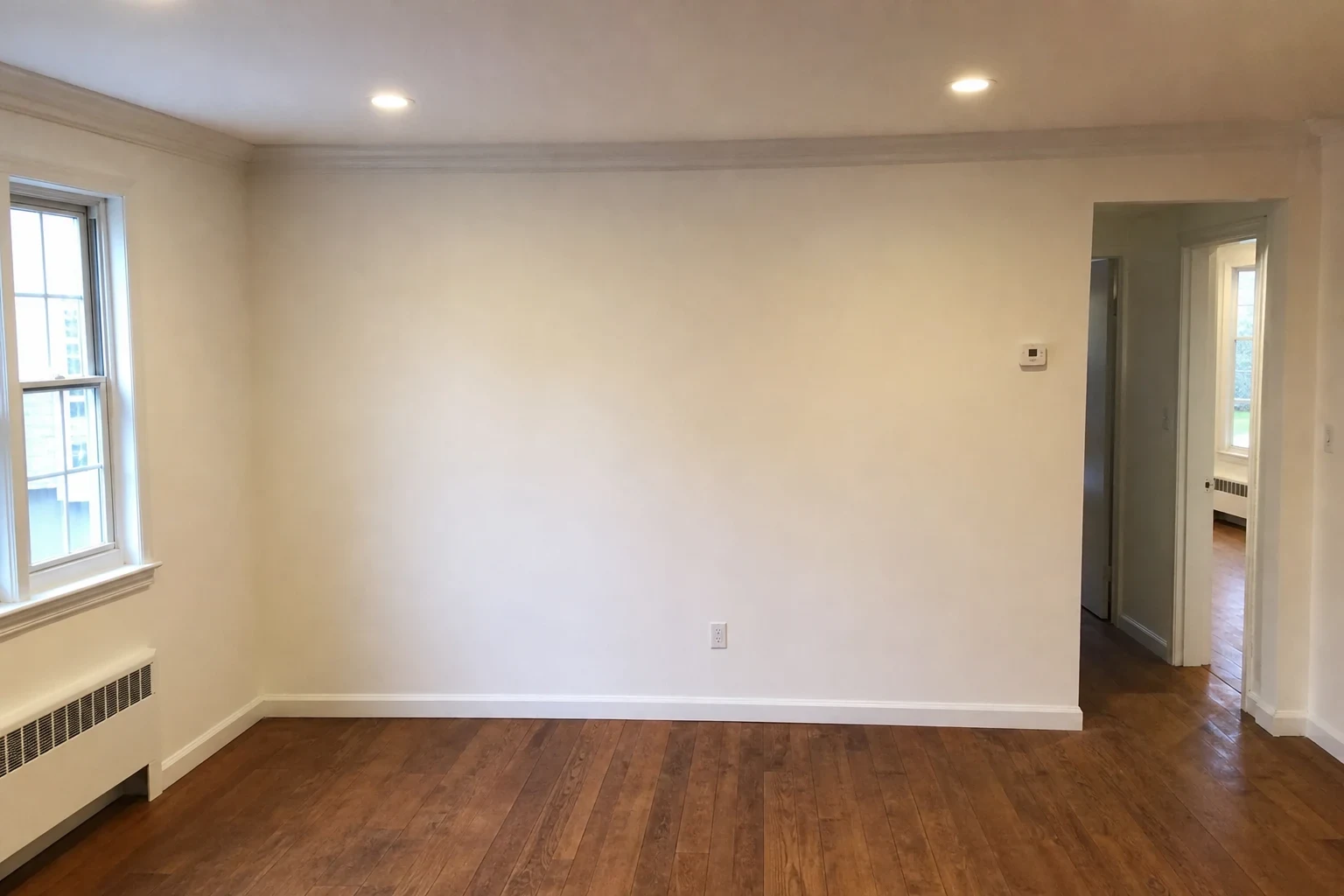
Let's get that wall closed up
Describe the damage and roughly how many spots need attention. We will explain what each patch takes and give you an arrival window that works with your week.