ServicesDrywall Hanging
Drywall Hanging in Bayonne
We hang new drywall on open studs, over failing plaster and across whole ceilings, choosing board for each room and fastening it so the finish goes on smooth. You get a realistic timeline before we start and a call from us if anything shifts.
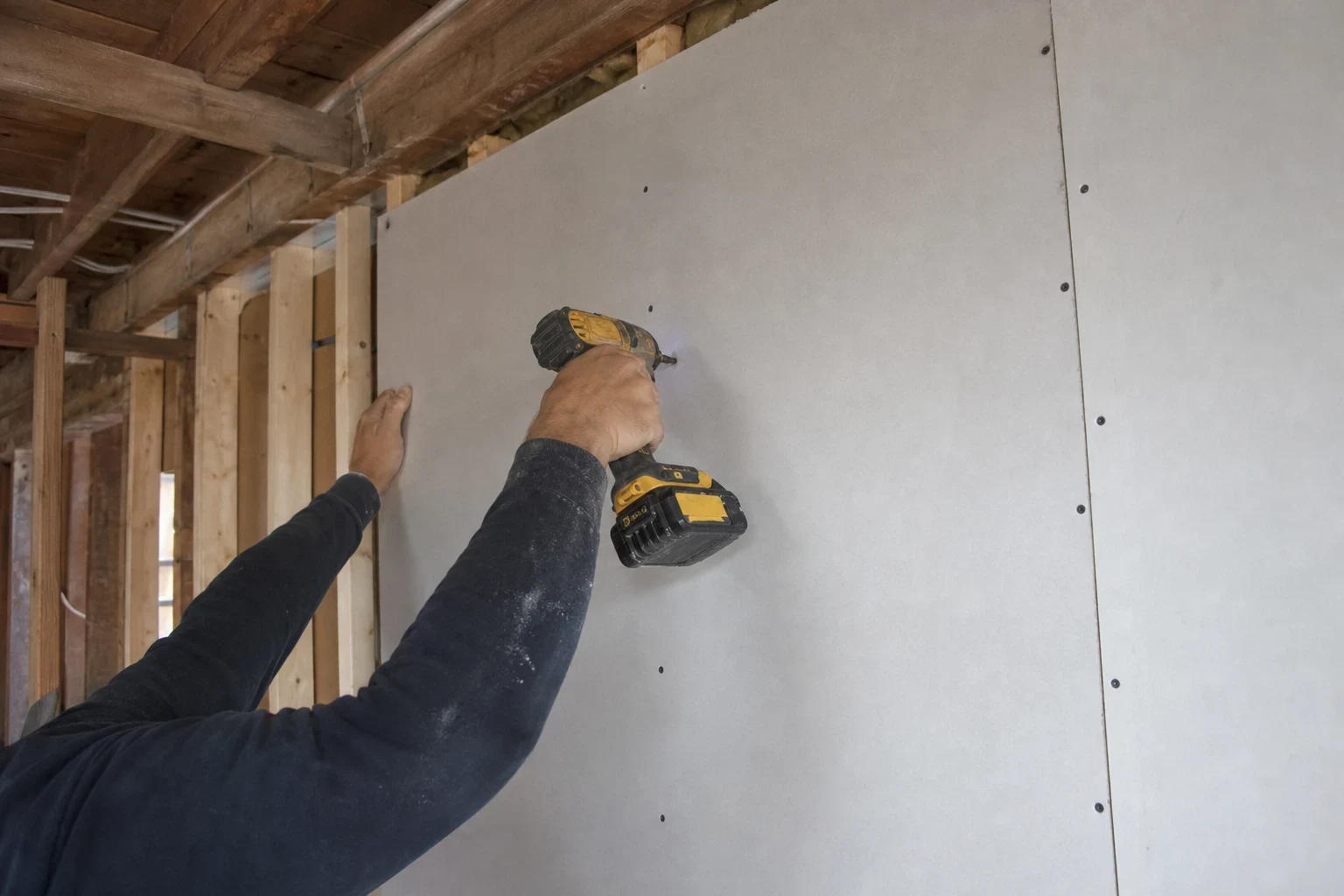
New board, hung right the first time
Drywall hanging is the stage where full sheets go up on framing or over an old surface. It is the right call when the damage is too wide for a patch, when a renovation has left the studs bare, or when tired plaster has stopped holding together. How well the board is hung decides how good the finished wall will look, because crooked seams and missed studs show through every coat of compound.
We plan the layout before we cut. Long sheets keep the seam count low, butt joints are staggered so they never line up, and ceilings go up before walls so the wall board supports the ceiling edge. Once the board is fastened, the wall is ready for taping and the coats described on our drywall finishing page.
Because hanging usually comes before finishing, sanding and paint touch-ups, your project has several stages. We map them out on the first call so you know which days we are working in your home and which days the compound is simply drying.
What a hanging job includes
- Board matched to the room
- Standard half-inch board for most walls, sag-resistant or five-eighths board for ceilings, and moisture- and mold-resistant board for bathrooms and basements. Where a fire-rated wall is called for, such as between an attached garage and living space, we use Type X.
- Layout and cutting
- We measure each wall, plan sheet placement to reduce joints, and cut clean openings for outlets, switches, windows and fixtures so the gaps around them stay small.
- Fasteners set with care
- Each screw goes into the framing at the interval the manufacturer specifies and sits slightly beneath the face paper, never through it. Sheets stay snug against the studs, and you see far fewer popped heads down the road.
- Checking the framing
- Before board goes up we look for bowed studs, missing backing at corners and uneven joists. Small corrections now save a wavy wall later, and we tell you if we find something bigger.
- Corner bead and prep for finishing
- Outside corners get bead, and the surface is left ready for tape and compound, whether we finish it ourselves or you schedule that stage separately.
- A clean work area each day
- Floors are covered, offcuts are hauled out and dust is kept to the rooms we are working in.
Signs your walls need new drywall
Plaster that is cracking and loose
Many older homes in the area still have plaster on lath. When it sounds hollow, bulges or crumbles at the cracks, hanging new board is often cleaner and longer lasting than chasing repairs.
Water damage across a large area
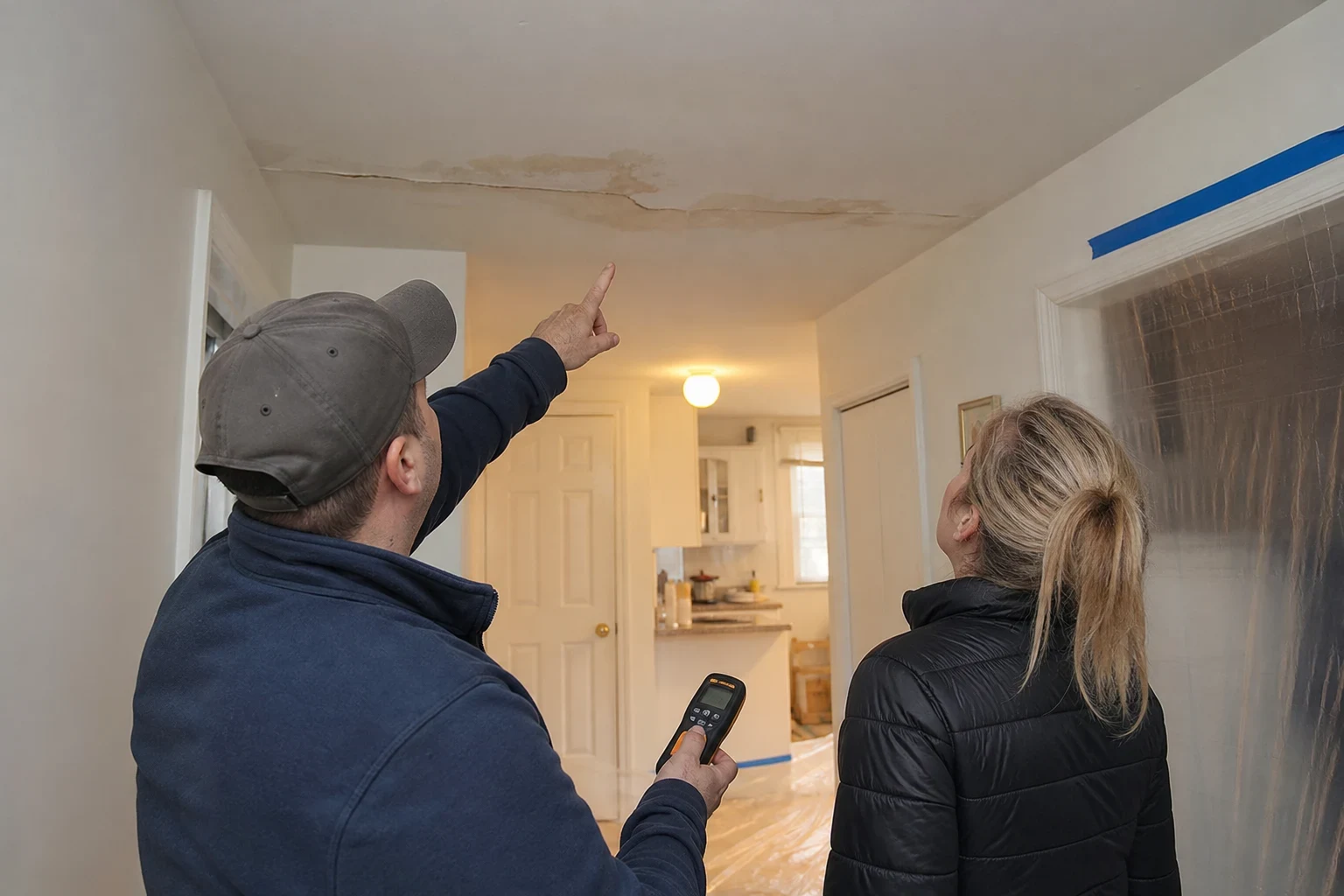
Stained, soft or swollen board that covers more than a small section usually has to come out. Once the source is fixed and the framing is dry, new sheets go in.
Open studs after a renovation
A gutted kitchen, a new wall or completed electrical work leaves framing that needs to be closed up before anything else can happen.
A sagging ceiling
Ceiling board that dips between joists has lost its hold. We take it down and rehang it, and smaller ceiling problems are covered on our ceiling repair page.
An unfinished basement or attic
Turning raw space into a usable room starts with board suited to the conditions there.
What shapes the price
Hanging is priced from the rooms themselves, so we quote after seeing them. The figure you get lists what is included, and if we find something behind the wall that changes the scope, we stop and talk it through before going further.
Wall area and room height
The more sheets a project needs, the more it costs in board and hours. Tall ceilings and stairwells call for scaffolding or a second installer to lift sheets safely.
Removal of old surfaces
Taking down plaster and lath is heavier, dustier work than hanging on open studs, and the debris has to be hauled away.
Type of board
Moisture-resistant, mold-resistant and fire-rated sheets cost more than standard board.
Framing condition and openings
Bowed studs, missing backing and many windows, outlets or angles all add cutting and correction time.
Permits
Some projects, such as a new fire-rated wall, may need a permit and inspection. We tell you if yours likely does.
The steps of a hanging job
- 1
Site visit and quote
We walk the rooms, take measurements, check the framing and go over board options. Your quote comes by phone with a suggested start date and an honest count of days for each stage.
- 2
Booking your arrival window
We lock in the date and an arrival window you can plan for. If an earlier job runs over or materials are late, you get a call the moment we know, not after your window is gone.
- 3
Room protection and prep
Furniture gets moved or covered, floors are protected and we seal off any spot where dust could escape. Old board or plaster is taken down if needed.
- 4
Ceilings first, walls second
Ceiling sheets are fastened first, followed by the walls, with staggered joints and set screws. Most rooms go up in about a day, though removing plaster or fixing framing can add time, and we tell you that in advance.
- 5
Clearing out and planning what follows
Scraps and debris are hauled away, we show you the hung rooms and we confirm the start of finishing.
Questions about hanging drywall
How long does the whole project take?
One room can often be hung in a day. Finishing follows with several coats that each need to dry, so start to finish is usually several visits over several days. You see the expected days before we begin, and we let you know if they change.
Can new drywall go over my old plaster?
In some cases. Flat, solid plaster can stay, with new board screwed through it into the framing. Loose or very uneven plaster is better taken down, and we tell you which route we suggest and the reason.
Can your crew also tape and finish once the board is up?
Yes. Hanging with the finish in mind usually makes for flatter walls, which is why many customers keep us on for drywall finishing. Surface preparation and sanding before paint can be added too. If you have your own finisher, we leave the board clean and ready to tape.
Do I have to be there while you work?
Someone should open the door and go over the rooms with us at the start. After that, most customers carry on with their day. We send progress updates and call before leaving.
What if the work takes longer than expected?
Surprises such as wet framing or extra layers of plaster can stretch the job. If we hit one, we show it to you, explain how it affects the schedule and agree on the change together before going on.
Time to close in those studs
Describe the rooms and what is on the walls now. We will go over which board fits, a schedule you can count on and what happens at each stage.