ServicesDrywall Repair
Drywall Repair in Bayonne
We repair damaged drywall in your home so the wall reads as one smooth surface again. Before we start, you get a plain timeline, including how many visits drying time will need, and an arrival window you can plan your day around.
When drywall repair is the right call
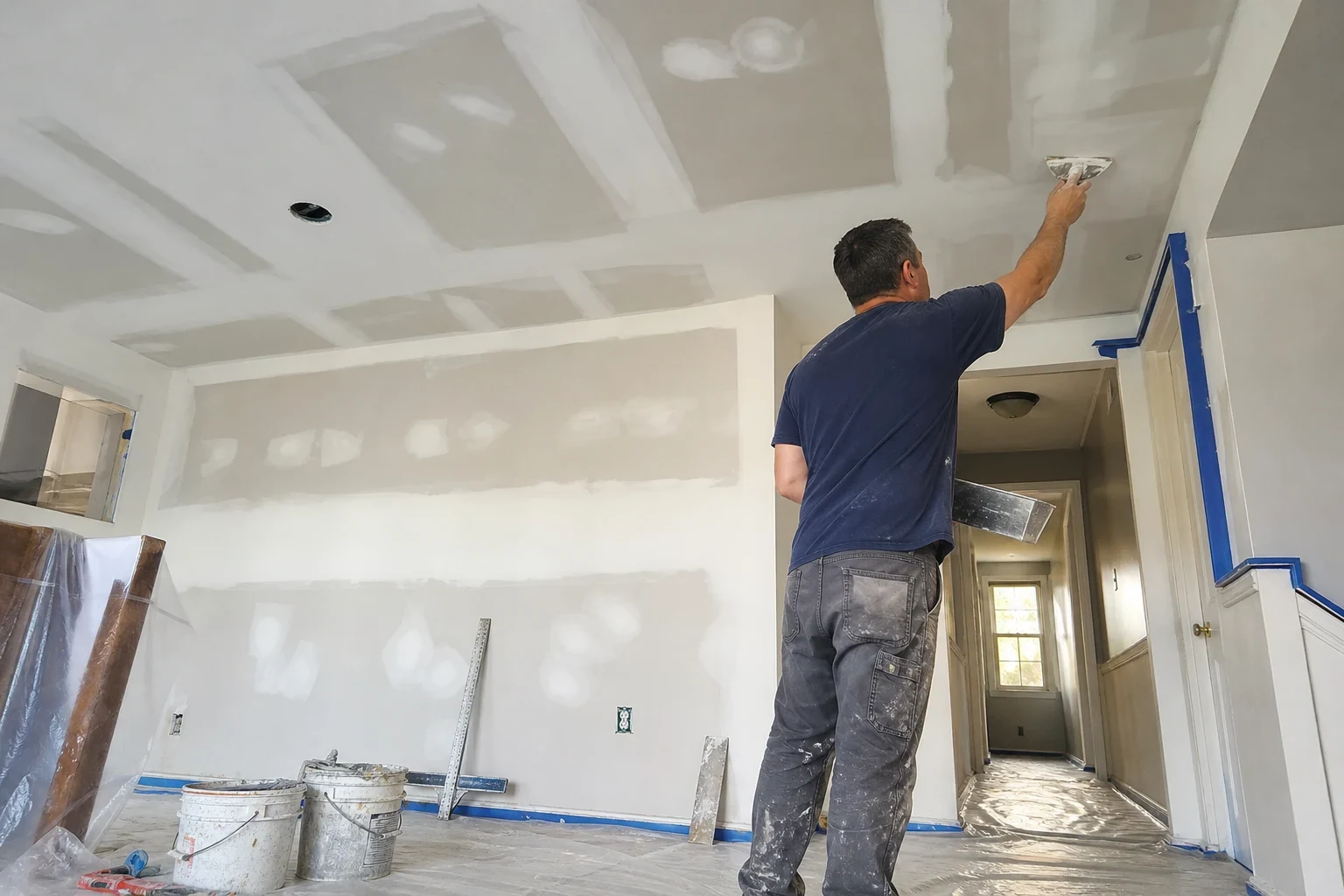
Drywall is forgiving material. A doorknob hole, a cracked seam, a section softened by a leak from above or a run of popped screws can usually be cut out and rebuilt without replacing the whole wall. Repair makes sense when the studs or joists behind the board are sound and the damage is limited to a few areas.
The part people underestimate is time. Joint compound has to dry between coats, and rushing it leads to shrinkage, cracking and a seam you can see under a lamp. We tell you up front whether your job is a single visit or two to three short ones, and we keep to the windows we give you.
What our drywall repair includes
- Assessment of the damage and its cause
- We look at what broke the board, not just the hole. A crack over a door frame, a stain that keeps spreading or screws working loose each point to a different fix.
- Cutting back to solid material
- Soft, crumbling or water-stained gypsum is cut out to clean edges. New board is fastened to framing or backing so the repair does not flex when the wall is touched.
- Taping and coating
- Seams get paper or mesh tape and several thin coats of compound, feathered wide so the repair blends into the surrounding wall instead of sitting on top of it.
- Texture matching
- If your walls or ceilings carry a knockdown, orange peel or hand-troweled texture, we match it so the patch disappears once it is painted.
- Sanding and dust control
- We sand between coats with dust control in mind and cover floors and furniture near the work. You get a clean work area at the end of each visit.
- Sealing the repair for paint
- Fresh compound is porous, so paint rolled straight onto it dries duller than the wall around it. We seal the repaired area with primer first. If you have the original color saved, we finish with a paint touch-up on the final visit.
Signs your drywall needs repair
Holes and dents
Doorknob strikes, furniture dings and anchors pulled from the wall leave openings that only get bigger with time.
Cracks at seams and corners
Hairline cracks running from door and window corners, or along tape lines, often come from seasonal movement. Many older homes in the area show them after a dry winter.
Nail and screw pops
Small round bumps or circles in a row mean fasteners have backed out. They need resetting and refinishing, not just a dab of compound.
Stains, bubbling or soft spots
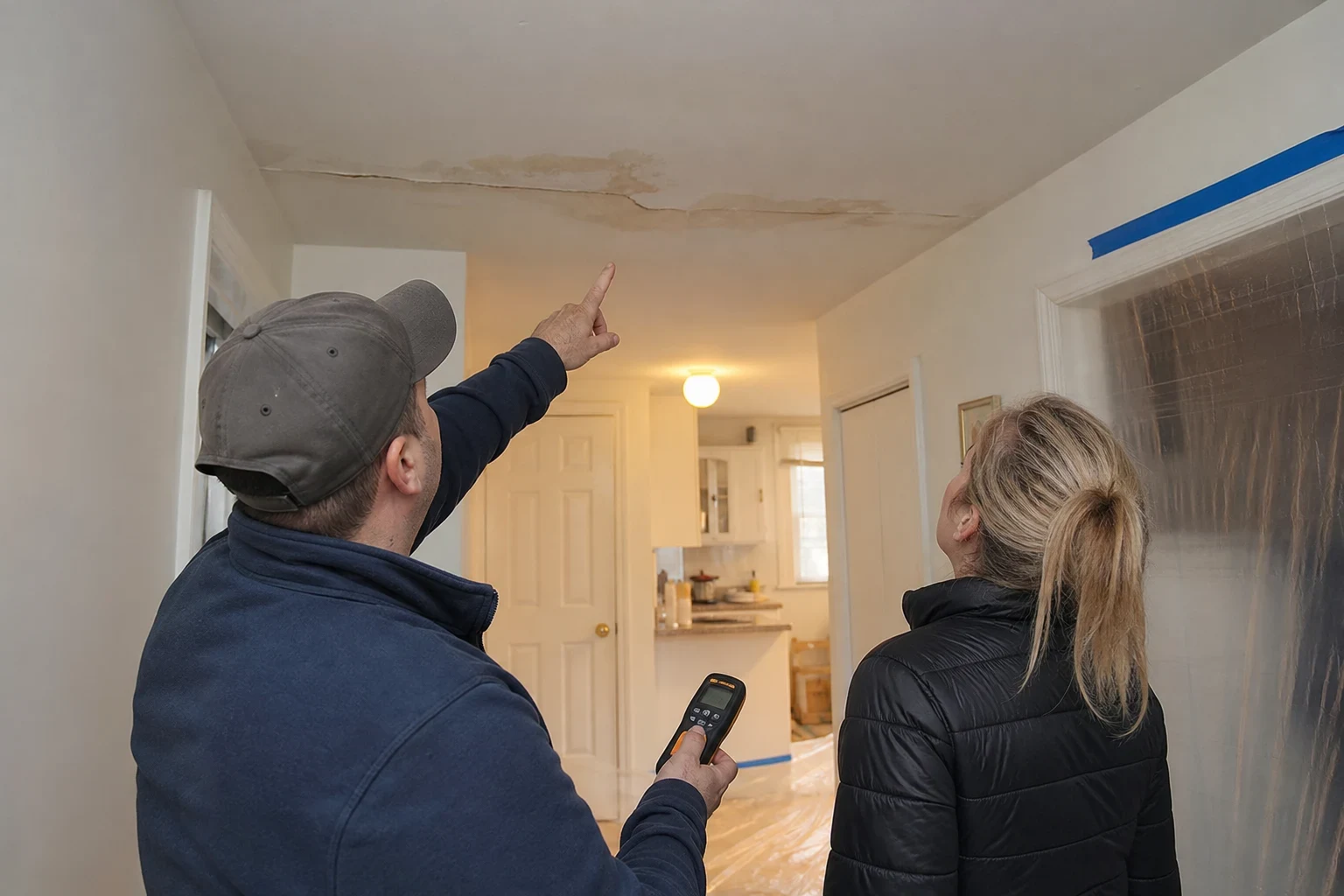
Brown rings or paint that blisters usually follow water. Once the source is fixed, the damaged board should be cut out rather than painted over.
Peeling or lifting tape
Tape that bubbles or curls along a seam was likely under-bedded originally. It has to come off and be redone for a lasting finish.
What moves the cost of drywall repair
Every repair is priced from what we find on site, and we explain the reasons before work begins. Most of the cost comes from labor and the number of visits, not materials.
Size and number of areas
One small hole is a short job. Several damaged spots across a room, or one large section, means more board, more compound and more time.
Location and access
Walls behind furniture, stairwells and high ceilings take longer to set up and protect safely.
Texture and finish level
A smooth wall in a softly lit hallway is simpler than a heavy texture or a wall that catches strong window light, where every flaw shows.
Condition behind the board
Water damage, loose framing or old repairs that failed can add work once the wall is opened. We show you what we find before going further.
How a repair job runs
- 1
Phone call and planning
You describe the damage and we ask a few questions about size, location and what caused it. We agree on a visit with a set arrival window.
- 2
Look and written plan
We see the wall in person, explain what needs to be cut out and how many visits drying time will need. You know the schedule before anything is opened up.
- 3
Repair day
We lay drop cloths, mask nearby surfaces, cut out the damage, set new board and apply tape and the first coats. Faster-setting compound helps on small jobs, but deep repairs still need overnight drying.
- 4
Finish visits
We return to apply finish coats, sand smooth, match texture and prime. If drying runs long in humid weather, we call ahead to reset the time instead of leaving you waiting.
- 5
Final walk-through
We check the repair under raking light with you, apply a paint touch-up where planned and leave the room clean.
Drywall repair questions
How long will my drywall repair take?
A small patch can sometimes be finished in one visit with setting compound. Larger repairs usually need two or three short visits across a few days because each coat has to dry. We give you that schedule at the start and call if it changes.
Will I be able to see where the repair was made?
Done properly, no. We feather the compound wide, match your texture and prime the area so it takes paint like the rest of the wall. Very glossy paint or strong side light makes blending harder, and we will tell you if that applies to your wall.
Do I need to be home for every visit?
Someone needs to let us in, but you do not have to stay in the room. Many landlords and property managers arrange access for us, and we confirm each arrival window the day before.
My ceiling has a water stain. Is that drywall repair?
It is the same material and much of the same process, but overhead work has its own setup. Our Ceiling Repair page covers it in more detail. Either way, the leak above should be fixed first.
Should I paint the area myself afterward?
You can, once the primer is dry. If you have leftover paint from the original color, we can apply a paint touch-up over the repaired area as part of the final visit.
Get your repair on the calendar
Tell us what happened to the wall and we will give you a realistic timeline and an arrival window that fits your week. We serve Bayonne and nearby towns including Jersey City and Union City.